
The Churches of Nicholas Hawksmoor
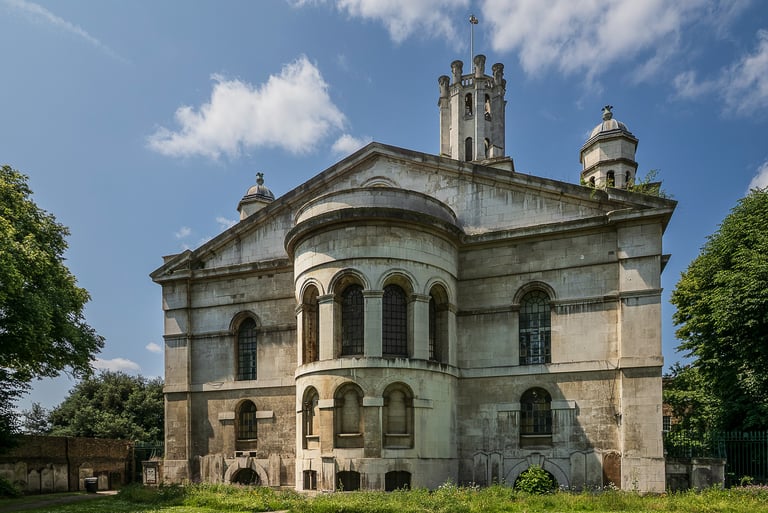
St George-in-the-East, Wapping
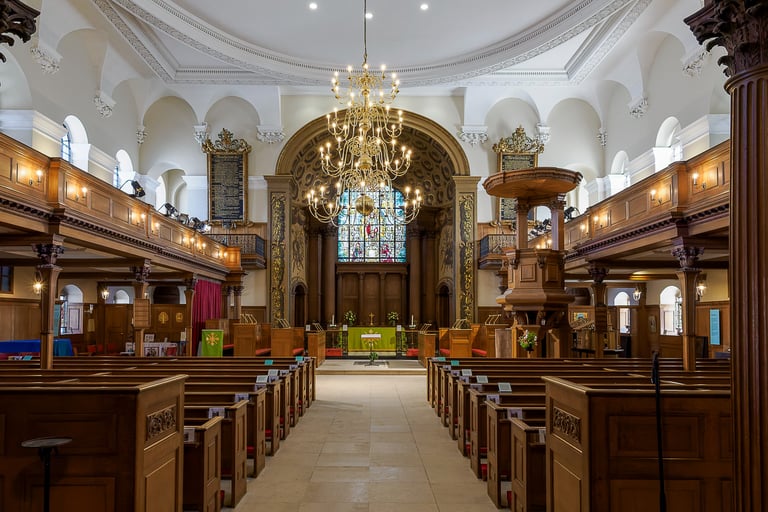
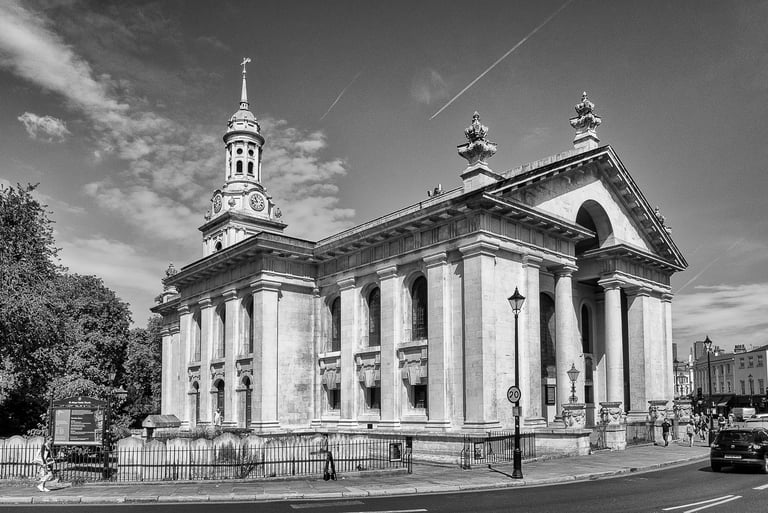
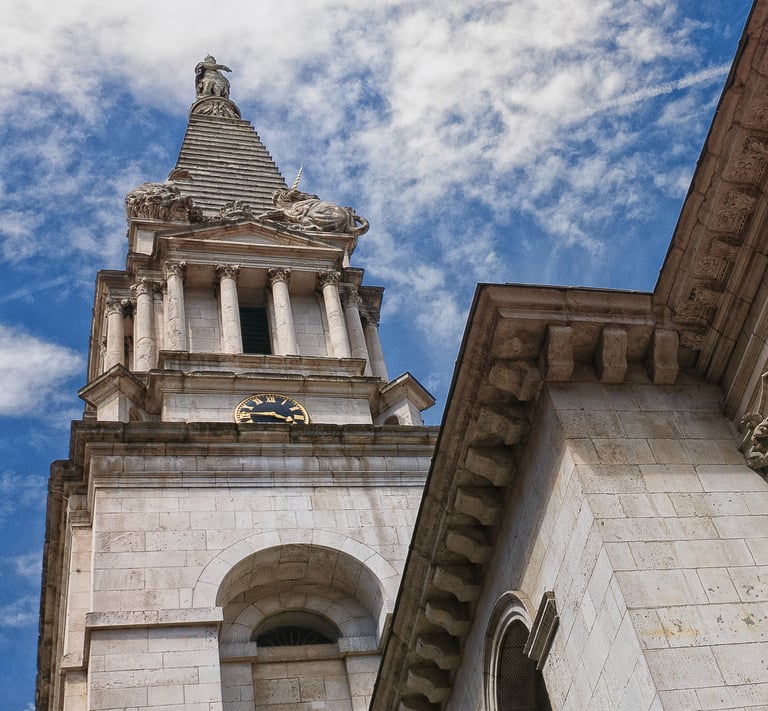
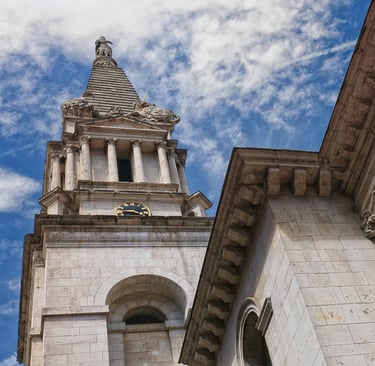
St Alfege, Greenwich
These images were originally taken for the RPS London group's 2025 Architecture Exhibition, which is still being prepared. Each photographer contributed to an A1 panel, with up to 18 photos. I took a few more than that... So the images above for each church link to pages with far more of those photos than I could feature in the exhibition. I have also included a brief history of each church and links to more information.
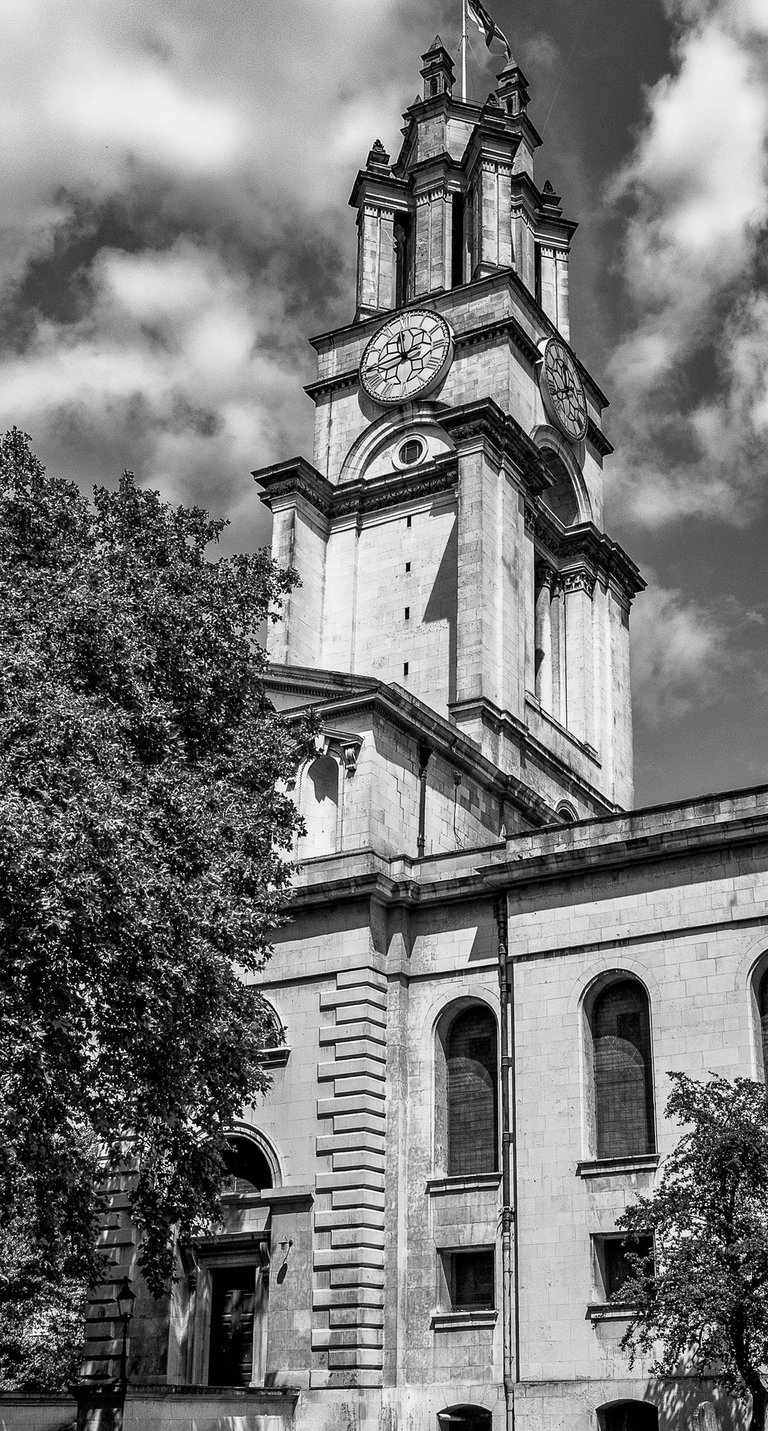
The six Hawksmoor churches are the finest examples, after St Paul's Cathedral, of Baroque ecclesiastical architecture. Nicholas Hawksmoor (1661-1736) had a vision for his churches that was largely unique - towers that would announce their presence for miles around, with naves that were as cavernous as the footprint of the building would allow. They were intended to cement the power of the established church, but equally exist as high art in architectural form. Three hundred years after they were built, having survived bombs, developers and neglect, they remain some of the finest buildings in London.
St Anne's, Limehouse
A new church building enterprise was proposed, to bring Anglicanism to areas where nonconformism had taken hold, or where houses had sprung up without a parish church. The Fifty New Churches Act 1711 used revenue from the coal tax (first implemented to rebuild churches lost in the Great Fire of 1666) to build churches, mainly intended for east London.
The definition of ‘new’ was, however, stretched to include rebuilds – the very first project was a replacement for St Alfege in Greenwich, the roof of which had collapsed in a storm. The local populace lobbied hard for a new church and so the first project was the rebuild of an existing church in a Royal Borough. Hardly pushing Anglicanism into the uncharted corners of the capital, with its proximity to the Old Royal Naval College an example of Sir Christopher Wren and Hawksmoor working together.
Nicholas Hawksmoor was born in Nottinghamshire in c. 1661 – so little is known about his origins that the precise date is unclear. After spending his youth in the East Midlands, at 18 he became clerk to Sir Christopher Wren, already the leading English architect. There could be no finer apprenticeship for Hawksmoor, nor a better way for a Nottinghamshire lad to gain access to London society, if only initially as an observer. In spite of an impressive tally of architectural works, it has taken nearly two hundred years for him to emerge from the shadow of Wren and Sir John Vanbrugh, in particular.
Hawksmoor is variously described as a surveyor, an architect, a supervising architect (a composite role of clerk of works, project manager, structural surveyor, etc.), demonstrably paying his dues to rise up the hierarchy within the architectural elite. Then as now, talent was no guarantee of progress, but Hawksmoor demonstrated that a surfeit of the same did no harm to one’s social mobility.
His enthusiasm for absorbing Classical architectural precepts, then adapting them rather than merely paraphrase antiquity, created some of the finest Baroque buildings in Britain. St Paul’s Cathedral (in which Hawksmoor had a hand) may sit at the pinnacle of that style, but the six London churches he designed after 1711 are as idiosyncratic and elegant as that masterpiece on their smaller scale.
The opportunity to design the six churches that are his best known achievements came out of politics as much as religion. The Tories returned to power in 1710 after 20 years of Whig rule, determined to restore (Anglican) Church and State to pre-eminence. The English Civil War had undermined the traditional forms of both, while the threat of a Catholic revolt was an ongoing threat, even after James II was deposed in 1689. The Old Order was not going to relinquish its authority easily, even after a century of massive social and political upheaval.
Whether Hawksmoor was particularly religious or not is unclear. His reputation as the ‘Devil’s Architect’ is, however, a product of later generations’ imaginations, best exemplified in Peter Ackroyd’s splendid novel Hawksmoor. It is an intelligent and absorbing book, with Ackroyd adapting rumours of old for literary fictional effect. Importantly the novel revived further interest in Hawksmoor, even if some new students may have been disappointed at the lack of even tenuous evidence that a satanist was designing Baroque churches. His freemasonry is often quoted, with some desperation given he was latecomer to the order. His designs were unique but not blasphemous. He was inspired by Greek and Roman architecture, not pantheism. Having a fierce attention to detail is also not diabolical. I will continue to reread Ackroyd’s novel with joy, and my books on the ‘real’ Hawksmoor with equal pleasure.
A more prosaic problem restricted the original plans for 50 churches to only 12 in total – money. In following a long tradition of ambition exceeding budgets, the programme eventually stalled as the Commission overseeing it changed membership and baulked at the costs. As an example, Christ Church Spitalfields went four times over budget. Pocket change compared to, say, the Barbican and HS2, but conspicuous enough to annoy the Commissioners. The programme fizzled out, but Hawksmoor had taken his chance to build six beautiful and complex churches. They have suffered neglect, the Blitz and the interests of land developers, but all still remain in varying states of their original glory and all but St George-in-the East (due to bad bomb damage that destroyed the interior) and St Anne’s have been in some way restored to former glories. A campaign to fund a full restoration of the latter can be supported here: https://easydonate.org/the-parish-church-of-st-annes-limehouse/Hawks300
Nicholas Hawksmoor died in London on 25 March 1736. There is only one likeness of him – a bust at All Souls College, Oxford (where he undertook a number of projects). It portrays him wigless and somewhat grave, or perhaps pondering on the complexities of his next commission.
With his reputation now restored, he deserves to be long remembered for his many architectural achievements, with the six churches in London as the most public and accessible of those. They are worth a day of anyone’s time and are readily accessible by public transport. It is definitely worth checking ahead that they will be open (I still haven't made it inside St George's Bloomsbury...), although the exteriors merit a visit even if the church is closed.
In spite of my having blithely dismissed the occult nonsense, if you have a spare afternoon in November I encourage you to visit St Anne’s in Limehouse. Stand by the pyramid, gaze up at the tower and wait until perhaps you feel a shiver down your spine as the light fades and the tree branches rattle and snap in an easterly wind that threatens rain. The pace of your return to streetlights and traffic will be quicker for it, I promise, and your mind inspired. Just don't look back...
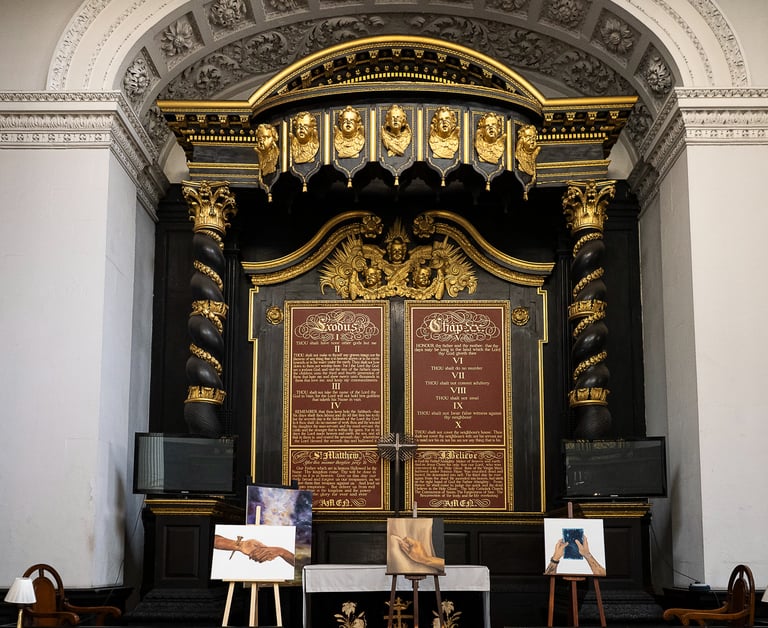

Altar, St Mary Woolnoth
The tower, St George's Bloomsbury
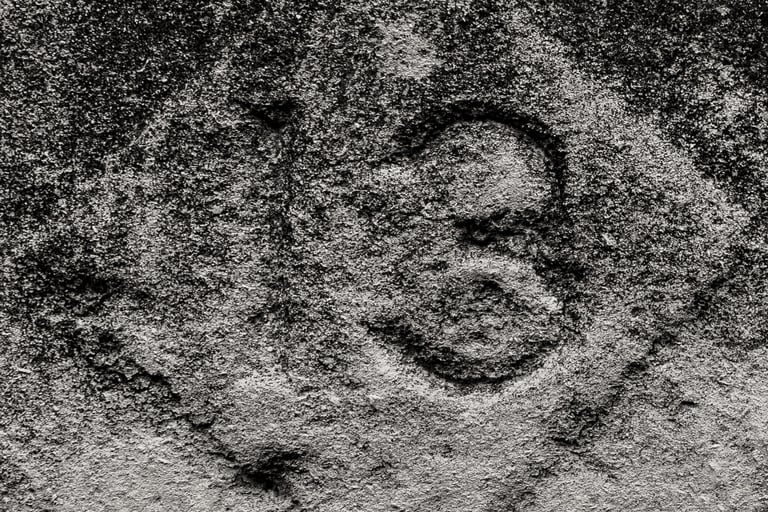
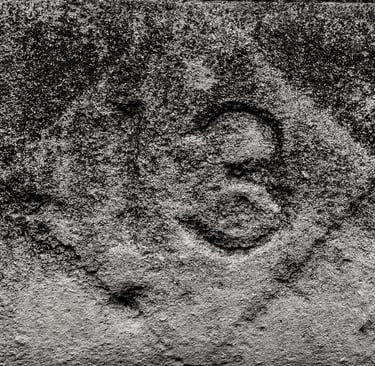
Unlucky 13, carved into the wall at Christ Church Spitalfields
St Alfege, Greenwich