
St George-in-the-East, Wapping
Built 1714-29, Consecrated 1729
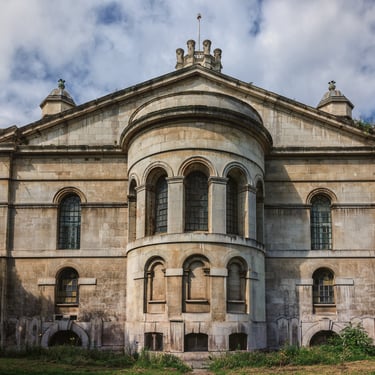
Eastern elevation, facing St George's Gardens
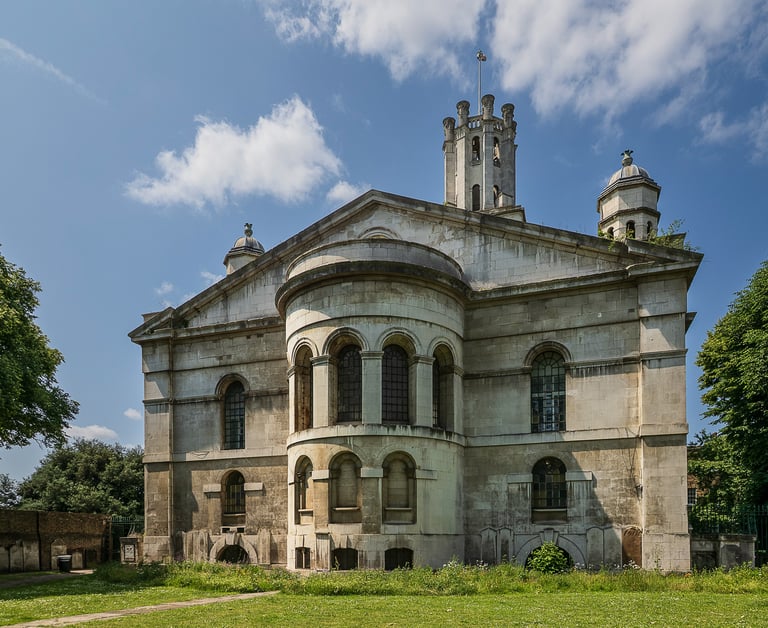
St George-in-the-East sits beside the Highway, on the border of Wapping and Shadwell, in an area that was a new neighbourhood when built. But this church, alongside St Anne's and Christ Church, was a bulwark of Anglican resistance to both 'popery' and non-conformism amongst the poor inhabitants of an area that was still semi-rural in places.
The original church was a statement of intent, both to ensure all the 'upstart sects' knew their place, and of Hawksmoor's devotion to classical precedents. It sits now at the west end of a small park, hemmed in on the north by some fine houses facing Cable Street, and the bustling Highway to the south. This is an area with plenty of modern history - the Battle of Cable Street was fought nearby, when Moseley's British Union of Fascists were shown what the East End thought of thugs and their aristocratic oligarchs. The mural on the end of the old Town Hall on the north-east corner of the park is an essential part of a visit to St George-in-the-East.
The Blitz did awful damage to this area, being so close to the docks. The church's interior was destroyed in May 1941, so that only the external walls were left intact. If by no means the only Hawksmoor church to suffer in that way, St George-in-the-East endured the worst of it.
The Exterior
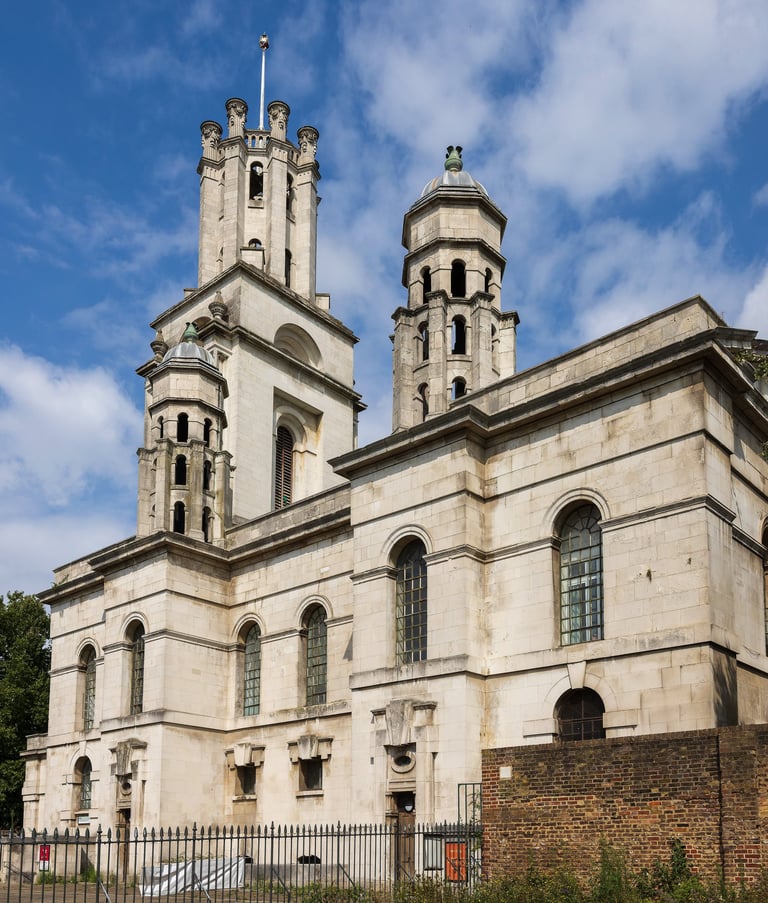
The tower and 'pepper pots' viewed from the SE corner
From the outside the church does not show the scars of that bombing. Its tower is intact (the design recycled from St Alfege when the expense of a new tower was not accepted there). It has some similarities to St Anne's, with its ascending levels acting as a pedestal to the final octagon.
If its intricacy was not enough, Hawksmoor included four minor, entirely decorative towers, nicknamed 'pepper pots'. How this elaboration was sneaked past the Commissioners of the New Churches is a mystery. Perhaps, as one of the first churches to be built, it escaped the scrutiny that befell later designs, with later commissioners more willing to query the need for such luxury.
St George-in-the-East is, with Christ Church and St Anne's, the best examples of meeting the original brief laid down in the Act. It was in a relatively new neighbourhood, a mix of fields and houses at that time, but closely associated with the river. It was far from rich, even if money was to be made by a few through trade, shipbuilding or other forms of maritime capitalism. These were the areas that the Anglican and Tory establishment were worried about, where the seeds of nonconformist religion would grow to crowd out their more orthodox and politically obedient form and where the local populace were too close to their definition of 'the rabble'.
The magnificence of the final product that is St George-in-the-East was either Hawksmoor demonstrating his commitment to 'shock and awe' design tactics on behalf of Anglicanism or, as I feel is far more likely, an architect slipping the money man's reins to create his vision. I doubt that the 'pepper pots' would inspire many Methodists or Quakers to return to the established denomination. Perhaps its mere presence was deemed enough, to show how powerful church and state remained - beware if you think you can challenge its entitlement!
The Interior
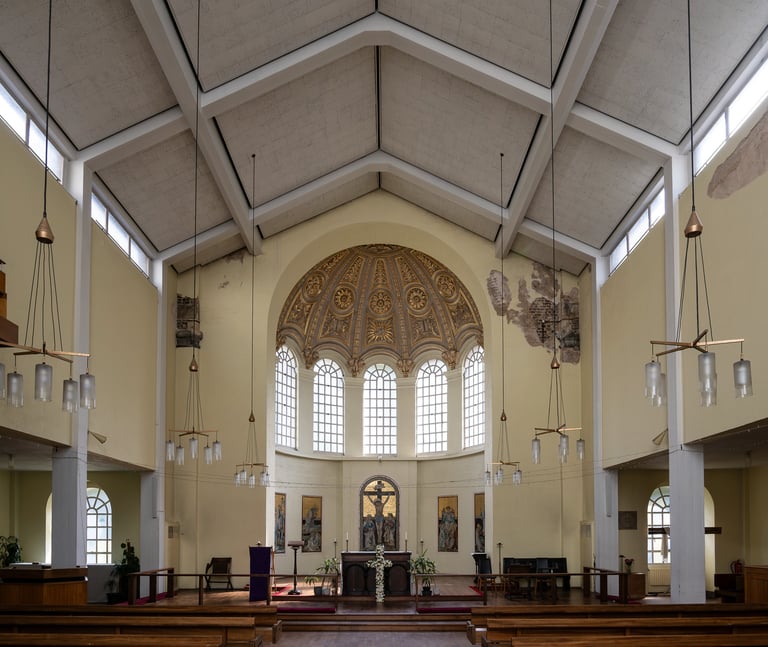
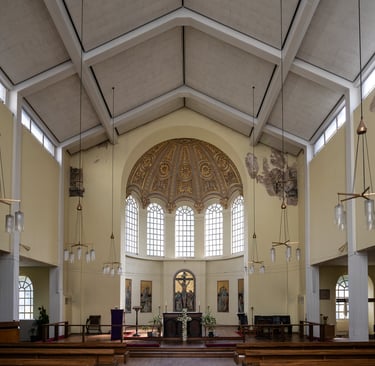
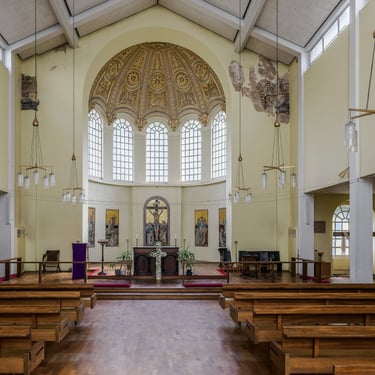
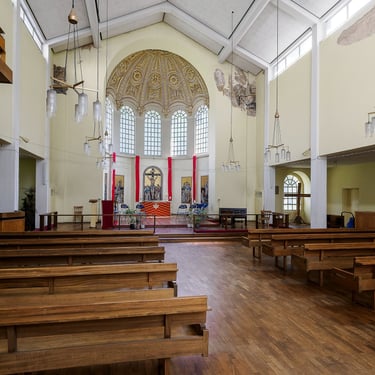
Sadly nothing remains of the original interior. We can only be 'grateful' that incendiary bombs fell on the church, not high explosive - the subsequent fire destroyed the roof and the internal fabric, but the outer walls, tower and turrets remained. Some of the original damage is visible in the photo opposite at the top of the wall beside the altar.
The new structure inside the original is much smaller, with a courtyard at the western end between the original tower entrance and the nave's new western wall. Given the state of the nation's finances in the post-war period it is entirely understandable why this compromise was chosen. The church was reconsecrated in 1964 as a simpler, functional space. The pews and lighting fixtures are very much of that era. One would have a shock on waking inside this relatively modern interior and then stepping outside to see the Baroque carapace.
I have chosen only to include my photos here, but there are a few grainy images of the original interior available online. It most resembles St Anne's in those images.
In spite of the loss of the original Hawksmoor interior, the church merits a visit both for the magnificent exterior and the intelligent reworking of the inner space. It has been open on most of my visits during the week, although the exterior is, of course, the main attraction.

St George-in-the-East Gallery
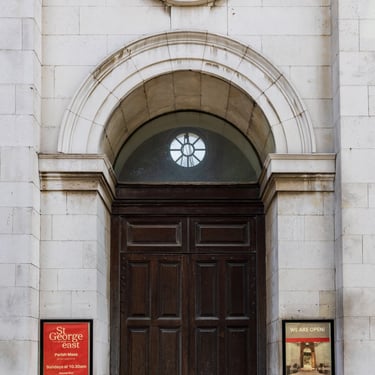
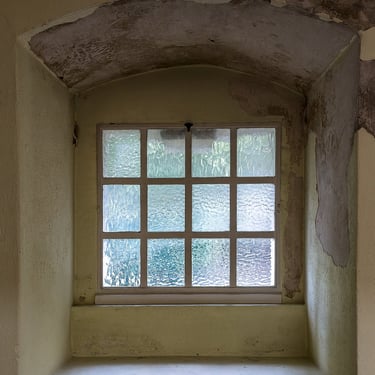
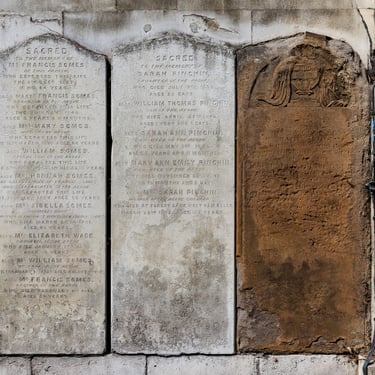
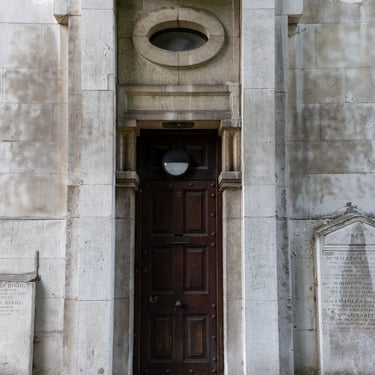
From the top left to right: 1. East end of the church; 2. The main entrance at the west end; 3. Interior view; 4. Interior view; 5. Original window, north side; 6. Courtyard and main window from west end; 7. Headstones stacked against the church wall; 8. External door on the north side
More Information
The Church website is unique in having no mention of Hawksmoor or the building's heritage. There is also a sign in the churchyard that says Hawksmoor was born in Northamptonshire, whereas all other sources says Nottinghamshire. These two facts are, of course, unrelated!
The National Churches Trust website has some more info here: https://www.nationalchurchestrust.org/church/st-george-east-shadwell
It also says the church is pretty much open at all times. This isn't my experience, so you might want to email office@stgeorgeintheeast.org in advance. As the architecture of the internal spaces is a post-war rebuild, this may be less of an issue, although the open courtyard behind the front door does provide excellent views of the 'back' of the tower.