
St George's, Bloomsbury
Built 1720-1730, Consecrated 28th January 1730
The last of Hawksmoor's six churches to be completed and the furthest west. The neighbourhood, now the environs of the temple of culture that is the British Museum, was then a notorious area of poor housing and the sort of debauchery the middle classes despise the proletariat for embracing, perhaps feeling left out? Hogarth's Gin Lane, 1751, features the distinctive tower of St George's in the background of its tableau of wanton, drunken wretchedness.
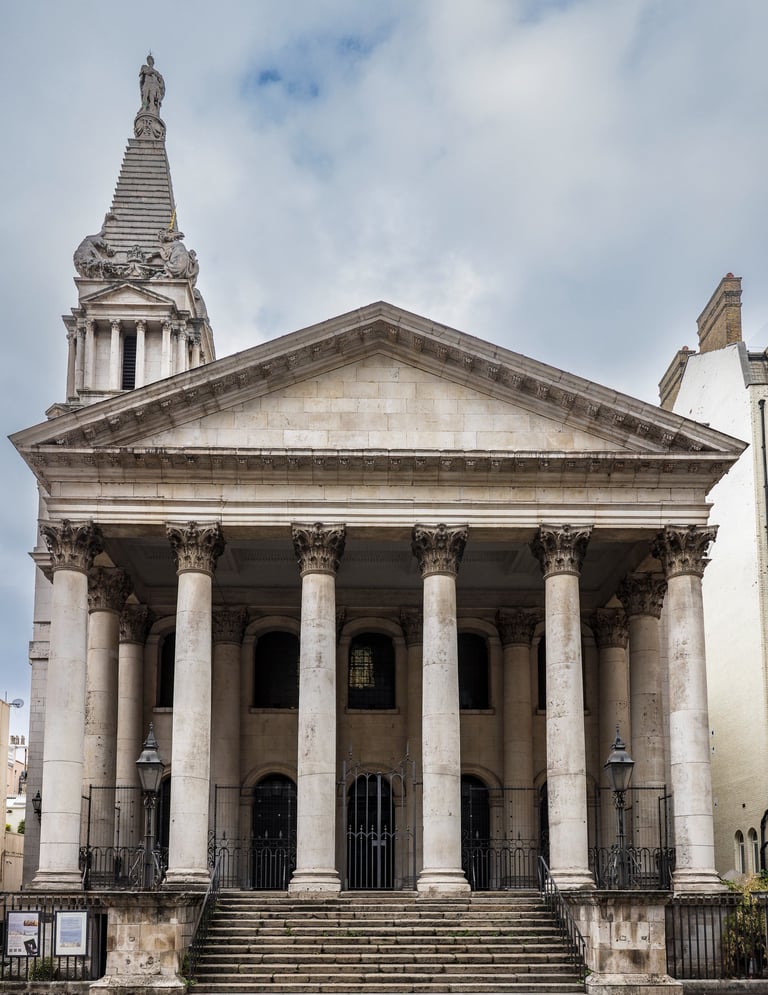

The church offers unique features, from the ziggurat tower (based on that of the Mausoleum of Halicarnassus), to the statue of George I on its pinnacle - his only stone likeness in the country. A slightly desperate and obvious display of sycophancy? Maybe, although there is a long tradition of naming bridges, railways, ships and countless other inanimate objects after monarchs. It certainly drew comment at the time, and not all respectful of what he had done. The passing of the crown from the Stuarts to the Hanoverians was only completed in 1714, a change of lineage that was still contentious to many. In that light, putting the new monarch's likeness on top of a church was certainly declaring one's allegiance, although for Hawksmoor that was possibly more about his chance of another commission than active support for that particular monarch.
In my experience St George's is not open as often as the other churches, with access provided by volunteers, so cannot be guaranteed. A fence is built behind the pillars of the portico so the closest one can get is the top of the steps. I visited during Open House and can only thank the volunteers and staff on duty for being so incredibly helpful. The church also has an excellent history on its website here: https://www.stgeorgesbloomsbury.org.uk/about-us
The church now hosts Korean and Ukrainian church communities and is visibly well used and maintained.
As with St Mary Woolnoth, the church is squeezed between buildings on both sides. These are not its original neighbours, but the effect is the same - that of a Classical temple shoehorned between far more strictly functional architecture.

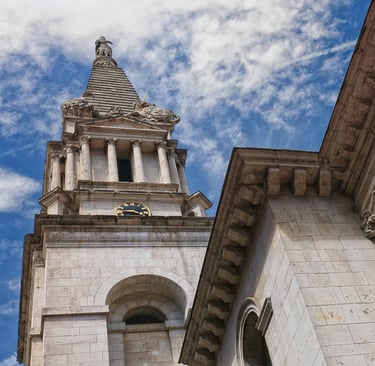
The church's portico is immense, with a pediment that would grace an original Greek temple. Again, no obvious expense was spared. The crypt beneath now houses the Museum of Comedy, where once it was the final resting place of 900 people. This association is so bizarre that I offer no further thoughts on it. I have yet to visit the museum, but I doubt any of the original features (stone, not corpses) are visible.
The northern façade is hemmed in behind some enormous London plane trees, off Little Russell Street. The fence along its boundary is quite tall, so it is difficult to get a clear view, but it is safe to say that the architecture on the Bloomsbury Way frontage is the main interest.
The tower is also decorated with a lion and a unicorn to reinforce the royal connection, above a mirror of a classical portico. This adds to the building's height, of course, as evidenced in Hogarth's drawing. It was a landmark in a way that has been lost as London's skyline has risen over time.
Interior
St George's Bloomsbury occupies such a tight site that the original traditional east/west layout was altered in 1781 to place the altar at the north of the church and thus expand the size of the congregation from 447 to 784 worshippers. This was reverted when the church's restoration was completed in 2009. One side effect is that brides being married in the Church have to use another entrance to avoid coming in at a right angle to the congregation!
The north gallery is not original, having been removed in 1781 and replaced with versions on the east and west walls. These in turn were removed in 1870. A new north gallery was installed as part of the restoration in the 2000s. The final part of that restoration was to install the Dutch chandelier that rivals any in the Hawksmoor churches, on loan from the V&A. It is a slightly older than the church and once lit a Catholic cathedral. Every object in these buildings has its own history. See also the chair on the bottom right of the gallery below, used by Emperor Haile Selassie when he visited the church in 1937 for a service of remembrance for those killed in Mussolini's colonialist Abyssinian War.

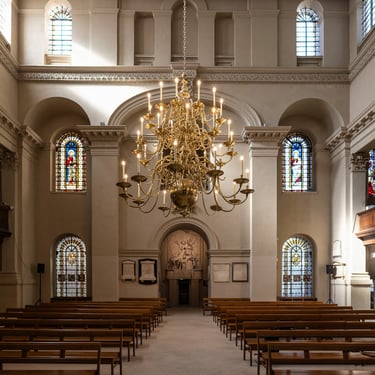
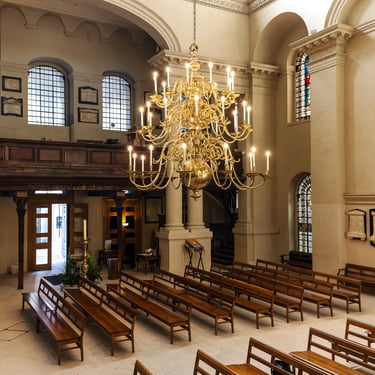
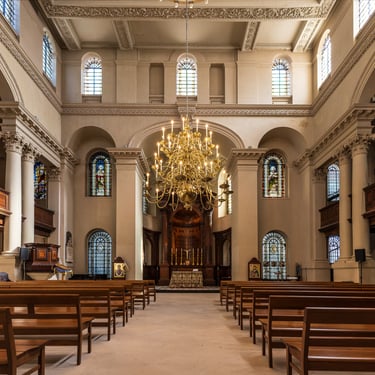
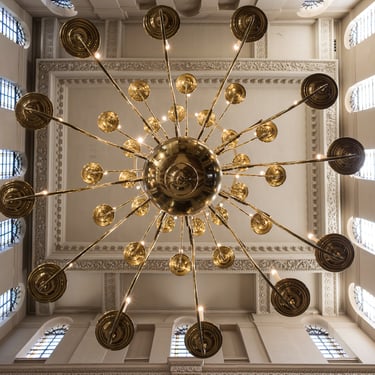
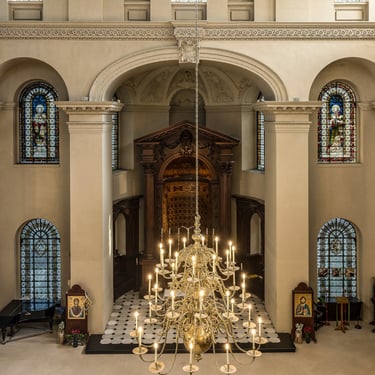
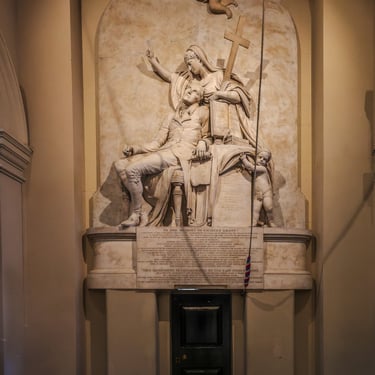
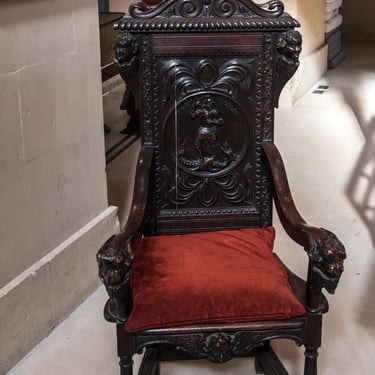
From the top, left to right: 1. Nave seen from the south gallery; 2. Looking west from the altar; 3. View of the nave from the pulpit; 4. View of the altar from the west end; 5. The magnificent Dutch chandelier; 6. View of the altar from the tower balcony; 7. The tower entrance; 8. The chair used by Emperor Haile Selassie on a visit to the church
More Information
I was only able to get inside the church during Open House, as I could not find any information on opening hours on the website. It was worth the visit and I thank the staff on duty for being so helpful on the day. The contact email is info@stgb.org.uk
The Church's website has an excellent section on its history: https://www.stgeorgesbloomsbury.org.uk/about-us
The National Churches Trust website summary is here: https://www.nationalchurchestrust.org/church/st-george-bloomsbury
The World Monuments Fund, which paid for much of the restoration works, sets out its contribution here: https://www.wmf.org/projects/st-georges-bloomsbury