St Mary Woolnoth
Built 1716-1727, Consecrated 1727
St Mary Woolnoth - a brief history
In many ways, St Mary Woolnoth is unusual in the company of the other East End churches - it fits more with the original campaign to restore the City's churches after the Great Fire of 1666 than to the 1711 Act, although its predecessor had been repaired by Wren.
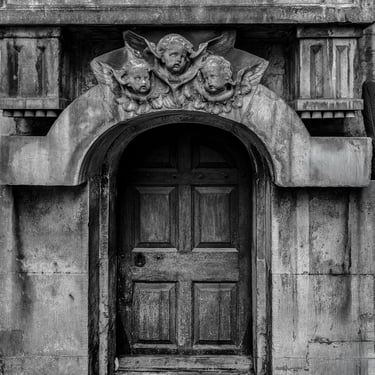
Construction began in 1716, with the new church finally opening on Easter Day in 1727. Compared to the other 5 churches, St Mary Woolnoth is small, more like a chapel than a parish church. This was born of necessity - although we can now enjoy views of the front entrance across King William Street, it would have been hemmed in by houses in a tight matrix of alleyways. This may explain the intricacy of the Lombard Street façade (the image below), on the northern side which allowed better views.
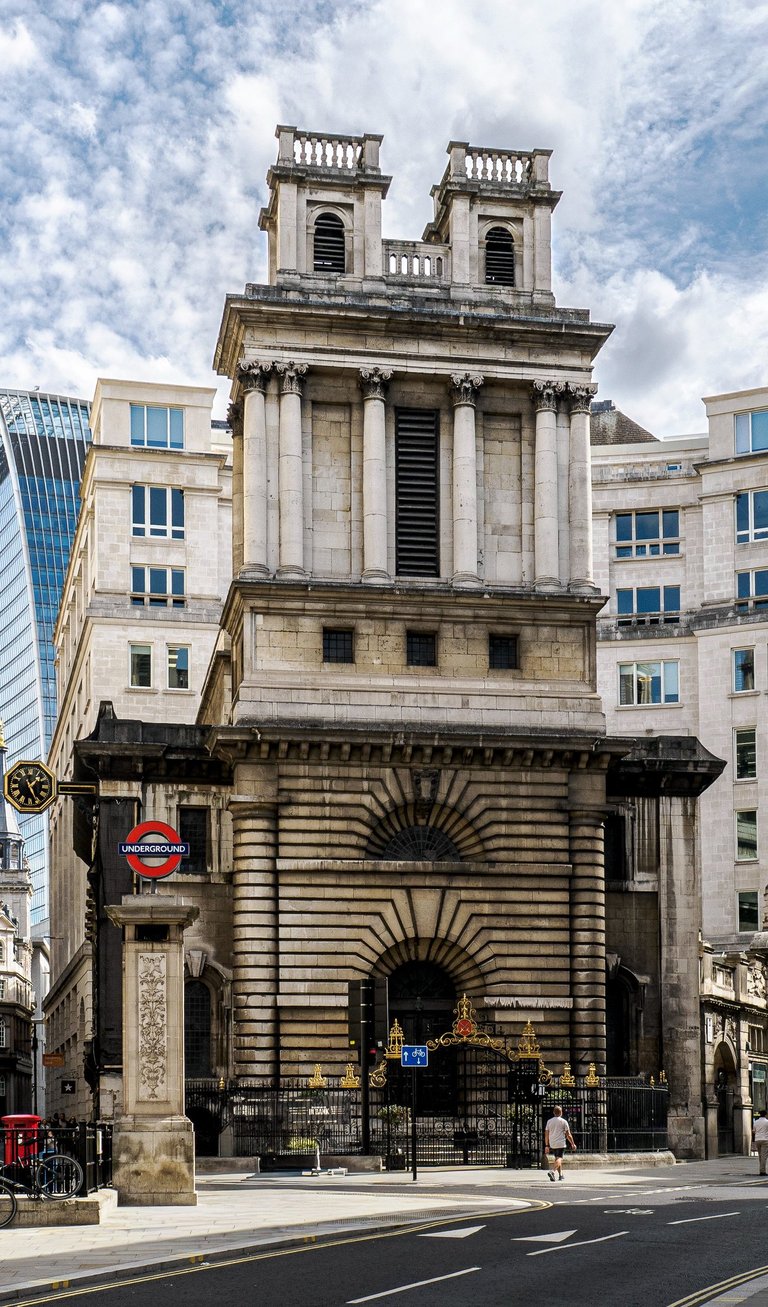
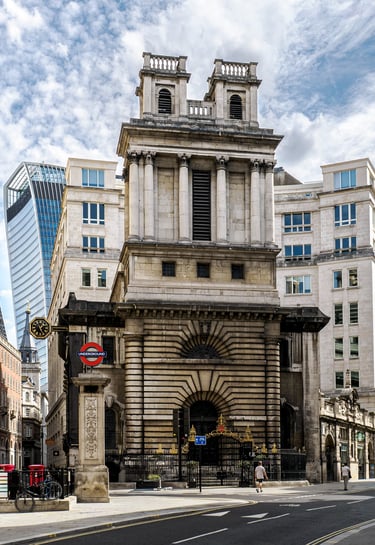

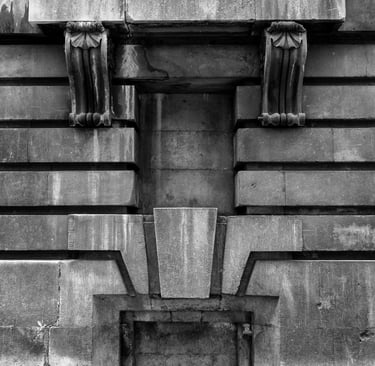
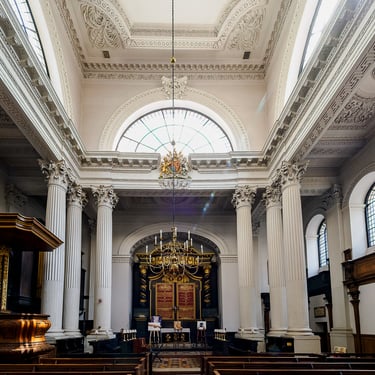
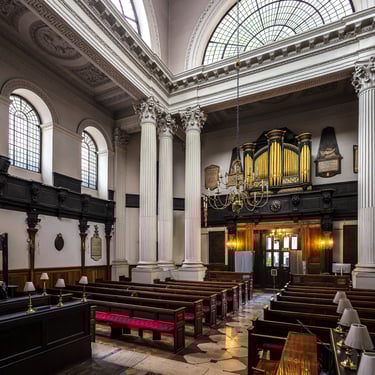
The internal layout has changed from Hawksmoor's original design, with the galleries (so prominent in nearby Christ Church Spitalfields) removed in 1876. It barely survived the construction of Bank underground station, having originally been slated for demolition. Thankfully a public outcry reversed that ridiculous decision. The nearby tube entrance is through the former crypt, and the building's foundations were shored up with steel beams to prevent it disappearing into the halls and tunnels below.
The church is at least the third on this site and it is rumoured that Hawksmoor found a Roman building when digging out its foundations. This may have inspired one of the more grisly episodes in Peter Ackroyd's novel (again, I urge you to find a copy if you haven't read it. It is inexplicably out of print but available on eBay, etc.). The church survived the Blitz, as its most recent threat, and was finally listed in 1950.
The origin of the 'Woolnoth' in the title is assumed to be of a benefactor. It adds a little uniqueness to a building that packs more character and intricacy into its small footprint than most others in the Square Mile. No wonder that T S Eliot chose it as a landmark in one of the most famous stanzas of The Wasteland, when the dead...
'Flowed up the hill and down King William Street,
To where Saint Mary Woolnoth kept the hours
With a dead sound on the final stroke of nine.'
St Mary Woolnoth - Gallery
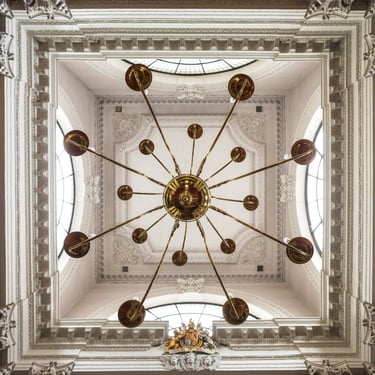
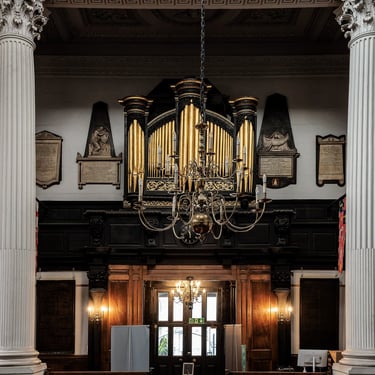
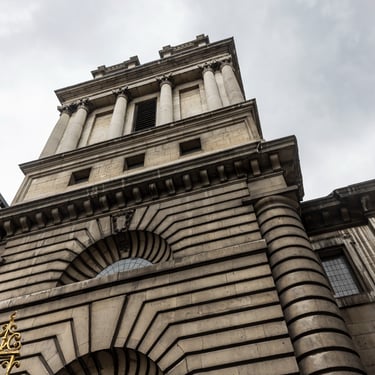
From the top, left to right: 1. Altar at the east end; 2. Ceiling at the centre of the nave; 3. The altar; 4.View from NE corner towards the entrance; 5. West end and entrance; 6. The pulpit; 7. Doorway at the NW corner of the front façade; 8. The tower
More information
The church is open from 7am to 4pm Monday to Friday (although the earliest I have been there is 9!).
A small coffee stand operates from the front porch, with tables outside so you can sip a cappuccino while you admire the building.
More information can be found at:
https://www.nationalchurchestrust.org/church/st-mary-woolnoth-city-london
https://squaremilechurches.co.uk/our-churches/church/st-mary-woolnorth/
https://www.london-city-churches.org.uk/Churches/StMaryWoolnoth/index.html