
St Anne's, Limehouse
Constructed 1714-27, Consecrated in 1730
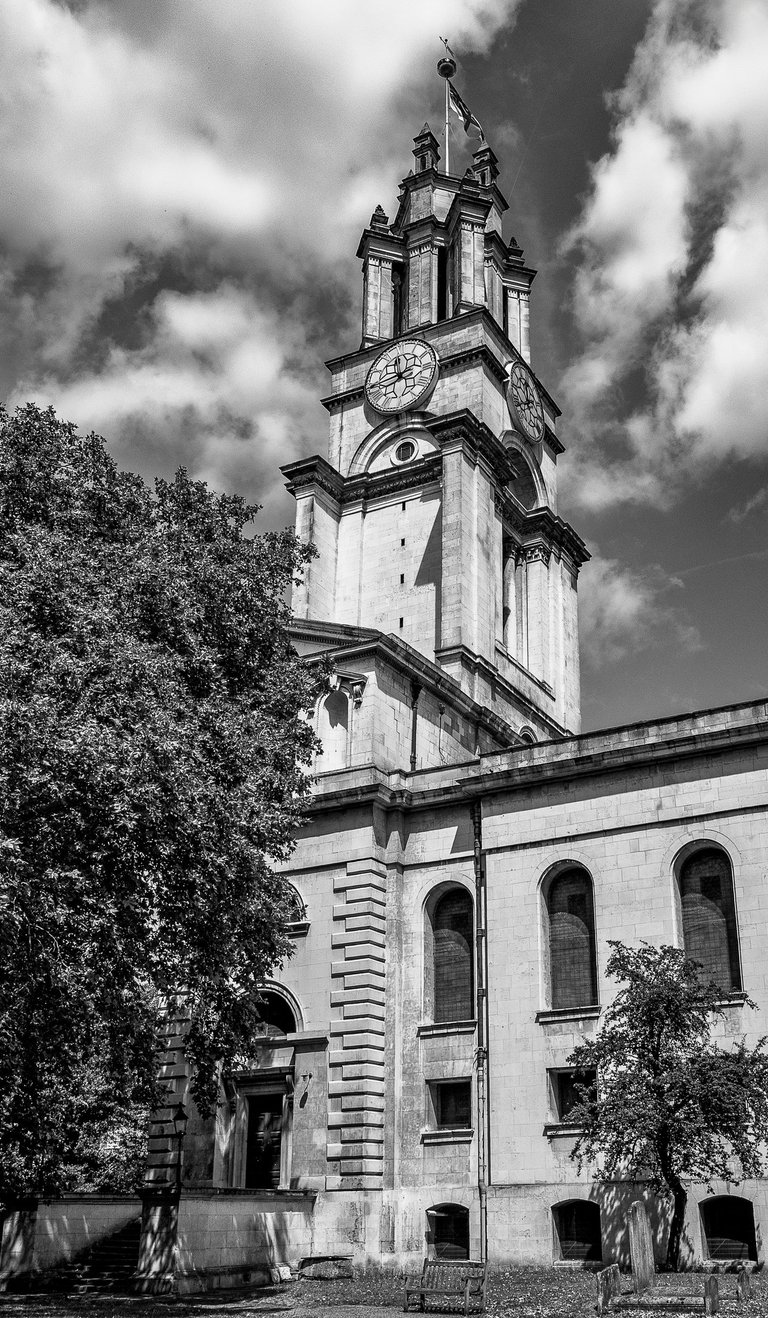
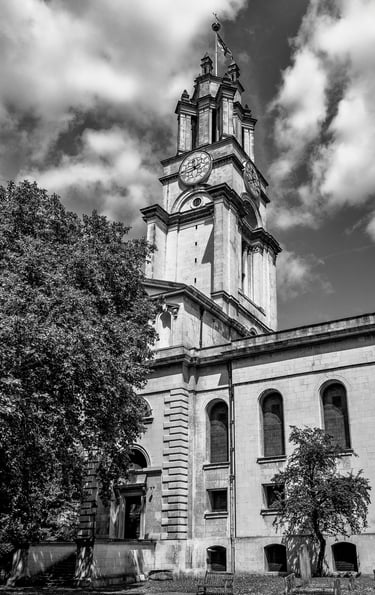
The tower of St Anne's, Limehouse - view from the south
The tower of St Anne's - viewed from the west
St Anne's, Exterior
The towers of all Hawksmoor's churches are characteristically complex, apart from St Alfege's, which was a later design by John James. St Anne's tower is extremely tall, visible from the river and built as a series of discrete layers.
The lantern at the top is a unique feature, topped by the flagpole flying the Royal Navy's White Ensign. Queen Anne gave permission for this flag to be used as the church was so close to the Thames, ship's captains could use it to register birds, deaths and marriages. It provided a convenient landmark for ships navigating their way up to the docks
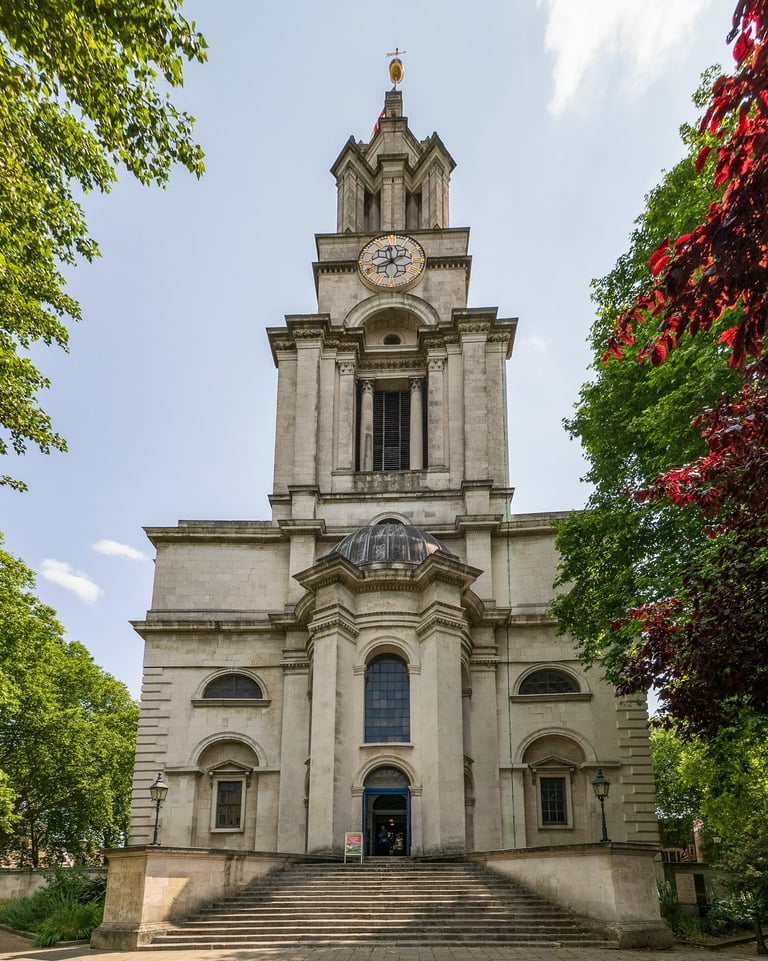

The golden ball is a more recent addition, designed by Julian Harrap. It complements the time ball at Flamsteed House, across the river.
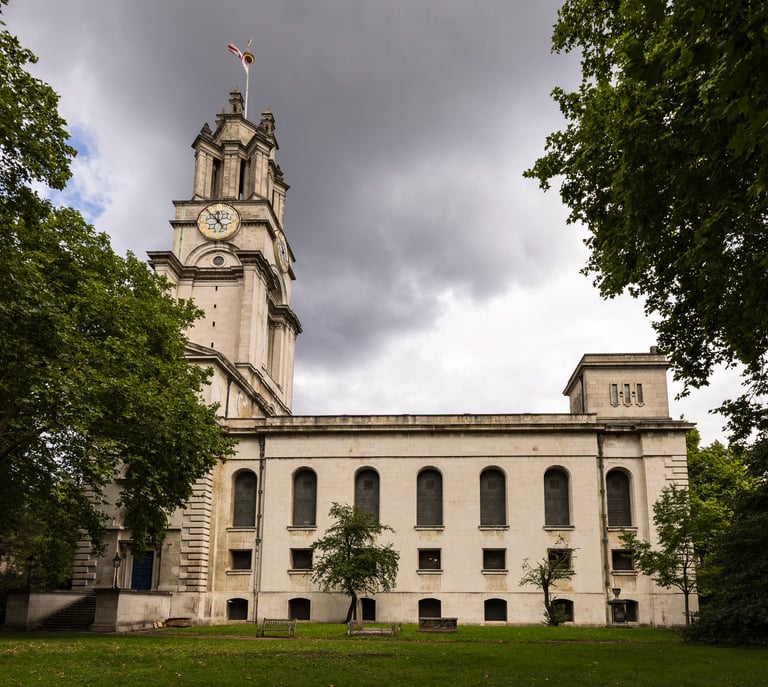
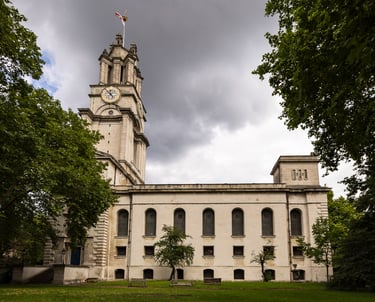
St Anne's, Southern Elevation
The walls on the north and south side of the nave feature a repeated trio of stacked windows, although the bottom layer is beneath the nave's floor. The upper windows, although tall, are relatively narrow and the galleries block much of their light from the nave itself.
The view from the south is across a broad expanse of grass, with very few grave memorials. Most of the gravestones are stacked against the outer walls of the churchyard - it was forbidden to bury the deceased within this area after the church opened, partly for practical reasons (it promotes subsidence), but also to prevent the risk of 'corporeal corruption' infiltrating a sacred space.
For the photographer, the trees obscure the façade in summer, but they also obscure the modern streets and houses. It is possible to blot out the 'real world' within this space. I also have an excuse to return in winter, when the trees are stripped bare.
The southern entrance beneath the tower is now behind a gate and fence that circles part of the churchyard on this side. Access is either from the north or west.
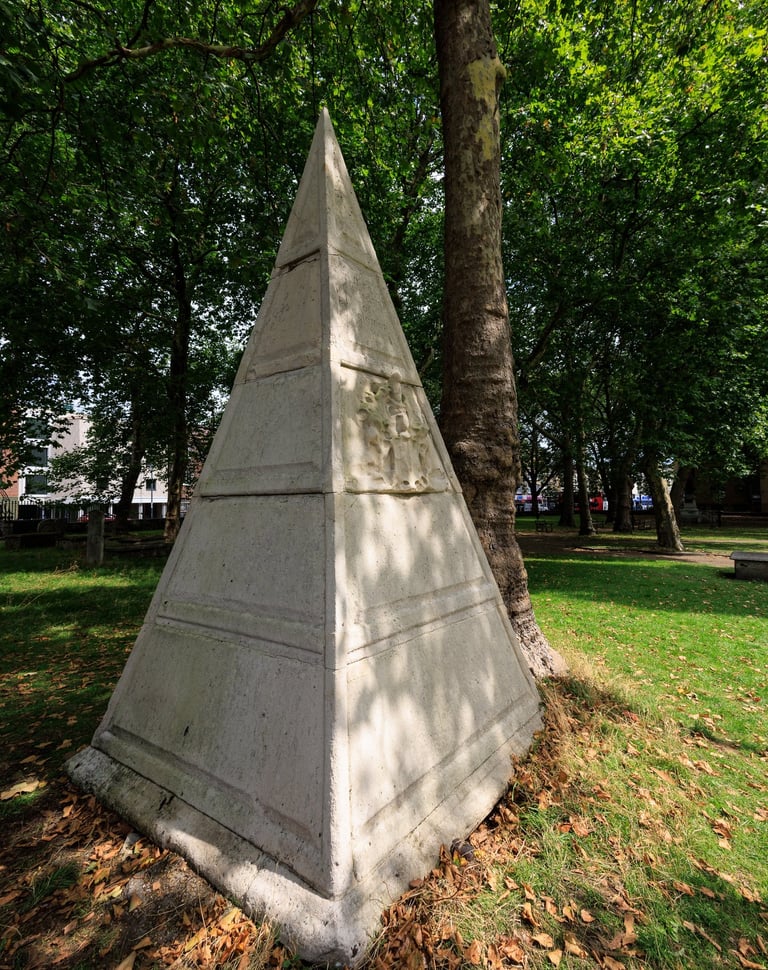
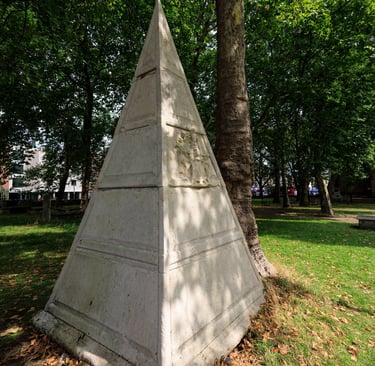
The Pyramid
One of the best known features at St Anne's is the mysterious pyramid on the north-west side of the site. It is tempting to delve into Peter Ackroyd's wonderful novel to assume the most diabolical thesis for its presence. Alas, the reason is the most prosaic - it was designed to sit on the roof but was too heavy to levitate. So it sits in the churchyard, in effect a grand ornament to the architect's occasional miscalculation. That hasn't stopped the conspiracy theorists from giving it mystical significance but anyone with only a passing knowledge of public building projects will recognise an elegant cock-up when they see one. Ackroyd plays around with the location and design of the Hawksmoor churches (as well as inventing Little St Hugh as a seventh site), so that Christ Church Spitalfields possesses a pyramid that does indeed herald diabolical acts.
I am not a superstitious person, but will own to feeling an unsteadiness of nerves when visiting this site in the winter, wind whipping the branches into a frenzy of skeletal fingers, rain threatening from the east. The dark folds in, and suddenly St Anne's is alive with awful promise and you fully understand Ackroyd's inspiration and viscerally feel the cold thrill of its past and apparent mysteries. I recommend it, although perhaps not to enjoy on one's own...
In summer, it is a delightful spot, with a steady stream of Hawksmoor pilgrims, and perhaps the odd devotee of Danny Boyle's 28 Days Later wishing to see the site of a pivotal moment in the film. More on that below.
St Anne's, Interior
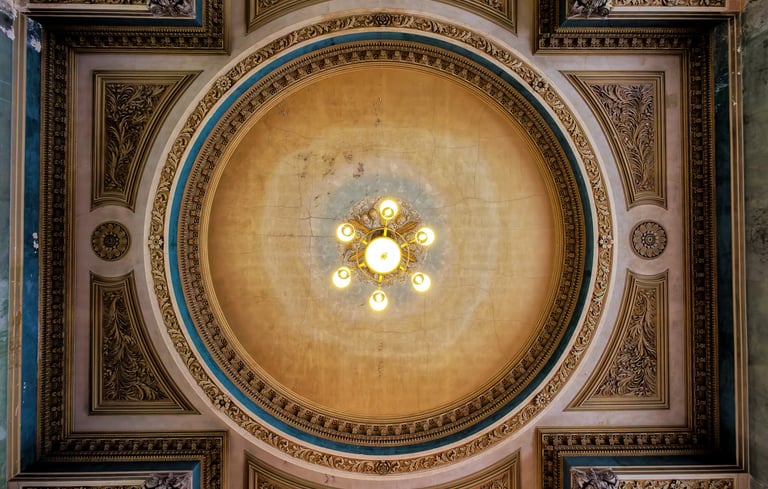
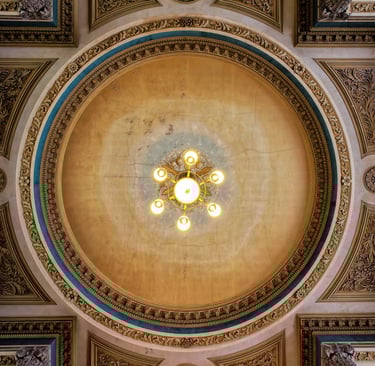
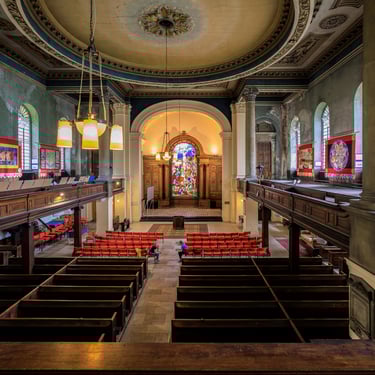
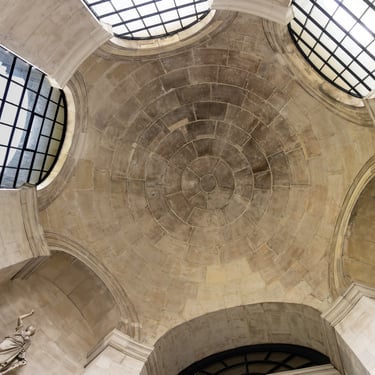
The interior of St Anne's is dominated by the panel in the ceiling shown in the photo opposite. Viewed from any other angle it creates an optical illusion that belies accurate reproduction in a photo - the round panel becomes oval and seems to lean towards the viewer. Many of my attempts to adjust photos taken from the nave or the galleries to correct this perspective failed dismally. This is not my getting in excuses early (well...) but a statement on the grand scale of the building.
St Anne's needs renovating more than the other churches (setting aside St George-in-the-East, which is radically altered within). It is ripe for renovation, and I would encourage anyone with an interest in this incredible building to visit https://easydonate.org/the-parish-church-of-st-annes-limehouse/Hawks300
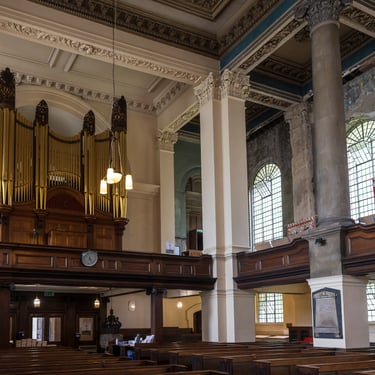
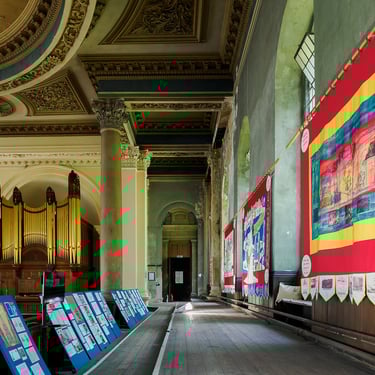
The galleries remain intact, unlike at St Mary Woolnoth, and give the interior much of its character of being slightly unwilling to give up all its secrets. The larger upper windows provide plenty of light to the galleries, but even then it is never as full of light and warmth as St Alfege. This is not a criticism, as it gives St Anne's more of a distinct atmosphere and sense of place.
Ceiling over the nave
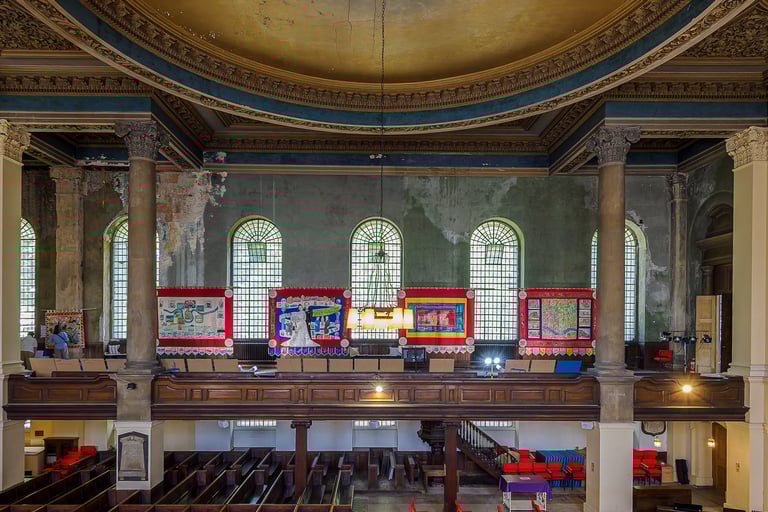
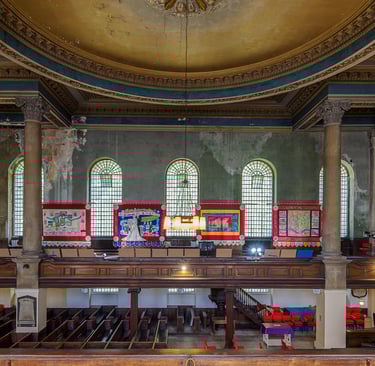
View from the south gallery across the nave
As the photos show, the walls also show damage, probably water staining. A fire in 1850 gutted the building, requiring extensive restoration, led by Philip Hardwick, who belied the usual Victorian trait of 'improvement' in favour of following Hawksmoor's lead. The Church survived the Blitz and even provided shelter to local residents during raids. It has not, however, received the same investment post war as St George's Bloomsbury, Christ Church or St Alfege, although it remains their peer architecturally.
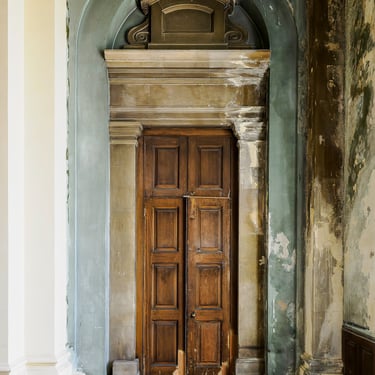
As mentioned above, the interior is used in Danny Boyle's 28 Days Later as Cillian Murphy's introduction to the 'infected'. He ascends to the south gallery, peering down at the countless dead bodies in the nave below, until some suddenly 'awaken'. I won't spoil it for those who may not have seen the film, but I always check the door in the first photo in the gallery below in case something 'untoward' should emerge through it... The parish priest at the time of filming even allowed the production to paint a message on the staircase to that gallery that contains some very terse Anglo-Saxon, merited by the film's theme if not the setting!
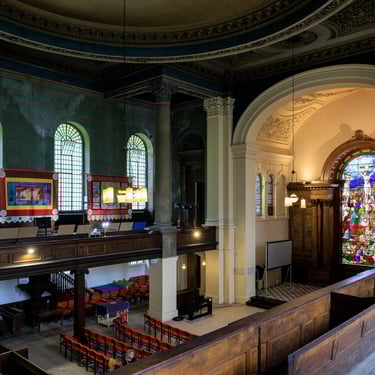
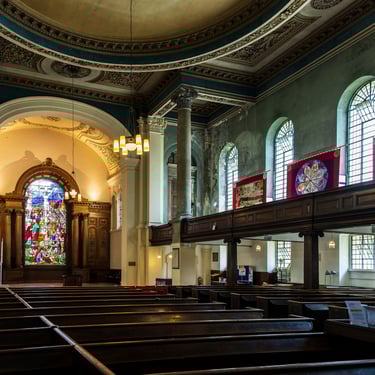
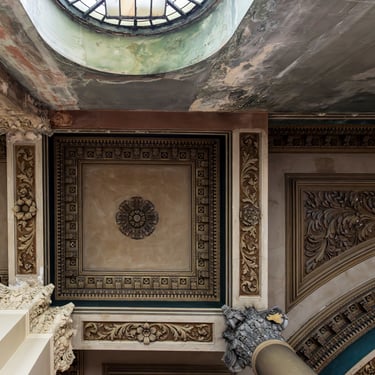
St Anne's - Gallery
From top left to right: 1. The door made famous by 28 Days Later; 2. Looking NW from the south side; 3. Looking east from the gallery; 4. The porch ceiling; 5. The north gallery looking west; 6. View from the south gallery; 7. view from the NW corner of the nave; 8. Ceiling panels
More Information
St Anne's is open on Thursdays, Fridays and Saturdays 10am-4pm, but do check in advance as this can change.
The Church publishes an excellent booklet about the church's architecture, available in the church,
More information is available online about the building here: https://stanneslimehouse.org/about/#ourbuilding
The link to donate towards the restoration project is : https://www.hawksmoor300limehouse.com/
The National Churches Trust has a summary of St Anne's architectural heritage here: https://www.nationalchurchestrust.org/church/st-anne-limehouse